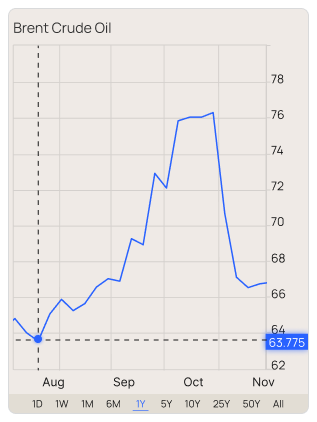
In the weeks leading up to the conflict, Brent crude
traded within a narrow channel, reflecting market
hesitation but not yet pricing in supply risk. Our
models detected early sentiment shifts among
institutional traders, signalling a potential breakout
before the event occurred.
...
For investors, such early insights create the
difference between reacting to the market — and
staying ahead of it. Strategic positioning before
volatility is not speculation — it’s discipline.
Beyond Oil — Into Intelligence


Morgan Meridian becomes an official partner of Arsenal F.C. — where energy meets strategy. The investment company has signed a multi-year agreement with the football club ...

Morgan Meridian presents a roadmap for the transition of energy funds to a low-carbon model. Morgan Meridian has developed an initiative to integrate sustainable investment principles into ...

Morgan Meridian raises £380 million in a new round of institutional financing. The company is strengthening its presence in the European energy market by attracting capital from ...

Morgan Meridian launches a programme for LSE graduates. The company is establishing an educational fund for ...
At Morgan Meridian, we turn information into strategy through analysis, structure and discipline. Our London desk monitors every market signal — from production reports to political events — to build forecasts that capture the true rhythm of global oil. Where others see noise, we see patterns of opportunity and the precision to act on them.
Conflict, Data, and Opportunity — The Suez Case
In early 2024, as geopolitical tensions escalated in the
Middle East, our analysts identified potential trade
disruptions through the Suez Canal — a critical artery for
Europe’s fuel supply.
Within 24 hours, Morgan Meridian initiated long positions on
fuel futures, capturing a 15% market surge. When U.S.
diplomatic intervention stabilized the region, our desk
reversed to short, securing multi-million returns within one
week. No speculation — pure analysis and timing.


Information as Leverage — The Trump Tweet Effect
When misinformation from U.S. media channels briefly destabilized global markets, our predictive sentiment models detected volatility spikes ahead of public reaction. By shorting correlated crypto-indices and energy ETFs, Morgan Meridian capitalized on the correction before it began.
Launch Your Oil Trading Strategy

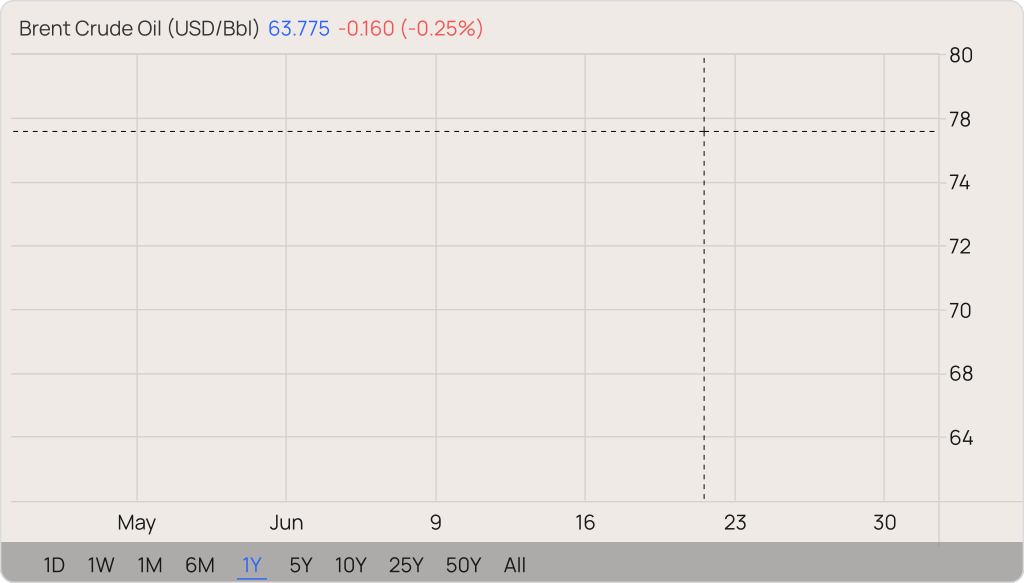
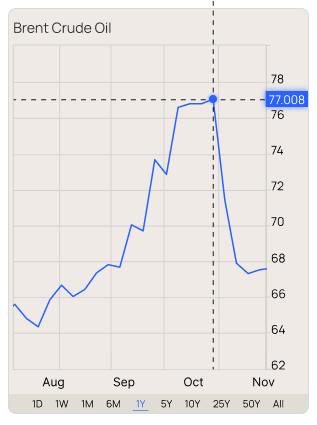
Market Reaction: Brent Oil Volatility
After the Escalation — Price Surge and Market Reversal
Following the disruption in the Suez route, Brent oil
prices surged over 15% in a matter of days, driven by
immediate supply concerns.
Morgan Meridian’s forecast models captured the
momentum early, positioning long before the retail
market reacted.
.svg)
Global Data & Signals

20+
key regions monitored daily
.svg)
Analytical Modelling
12.4K
trades executed in 2024
.svg)
Strategic Execution
£1.59B+
assets under active strategy
How we Works
At Morgan Meridian, every decision begins with analysis. We interpret global data, transform it into structured insight, and act with precision — bridging intelligence and execution across the world’s energy markets.
our team

12+
years in institutional strategy
Adrian Liang
[SEO Project]
Graduate of London School of Economics and INSEAD, Guess has over 12 years of experience in structuring digital and financial ecosystems for institutional clients in Europe and Asia.
He has supervised investment infrastructures exceeding £396 million and built data frameworks now used by multiple energy trading funds.
Begin Your Oil StrategyAdrian Liang
[SEO Project]

15+
years in macro analysis
Anna Koval
[Lead Analyst]
PhD in Econometrics from Cambridge University, alumnus of The Wharton School.
Anya specialises in macro-economic forecasting and geopolitical risk modelling. Before joining Morgan Meridian, she headed the strategic research unit at a Fortune 500 commodities firm with an investment portfolio of over £1.85 billion.
Begin Your Oil StrategyAnna Koval
[Lead Analyst]

9+
years in AI modelling
Kenji Tanaka
[Data Scientist]
Graduate of Oxford University and Tokyo Institute of Technology, Kenji has over nine years of experience in machine learning applied to financial markets.
He developed Morgan Meridian’s proprietary algorithmic forecast system that increased prediction accuracy by + 18.6 % YoY.
Begin Your Oil StrategyKenji Tanaka
[Data Scientist]

11+
years in energy trading
Isabelle Dubis
[Trading Strategist]
MBA from HEC Paris and London Business School, Isabelle has managed multi-asset energy portfolios totalling over £660 million for private equity and institutional clients.
At Morgan Meridian, she bridges quantitative insight and market execution — coordinating the London trading desk to ensure precision in timing and risk allocation.
Begin Your Oil StrategyIsabelle Dubis
[Trading Strategist]
A TEAM EXPANDING.RESULTS MULTIPLYING.
Growing Institutional Expertise
Our analyst group grows every quarter as demand for disciplined market intelligence increases.
Each new specialist strengthens our global capability — from macro research to quantitative modelling.
Morgan Meridian evolves continuously to meet the complexity of today’s energy markets.
Increasing Capital Under Guidance
This growth reflects the confidence institutions place in our
analytical discipline and long-term strategic vision.
Our strategies have monitored and supported institutional
portfolios exceeding £1.59B across energy, futures, and
multi-asset structures.
More Investors Joining Every Month
A growing number of clients rely on our structured analysis to
navigate volatility with clarity.
We onboard new partners every month — from private investors to
institutional entities seeking precise, intelligence-backed
market positioning.
.svg)
Proven Process. Measurable Outcomes.
Our methodology combines data, geopolitics, and timing into a
unified decision-making model.
During periods of extreme volatility, such as geopolitical
events or sharp market imbalances, certain trading scenarios
have historically shown position values increase by up to 150%
within a day—when the market moves rapidly and the strategy is
built with precision and discipline.